Keynote Speakers
Keynote Speakers
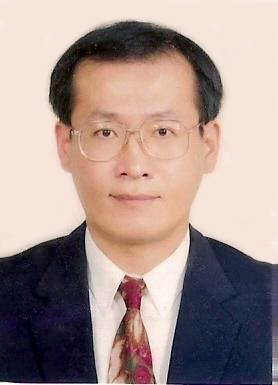
Prof. Shyi-Ming Chen (IEEE Fellow, IET Fellow,
IFSA Fellow, AAIS Fellow, IETI Distinguished Fellow)
Member of the National Academy of Artificial
Intelligence (NAAI),
Fellow of the Pakistan Academy of Engineering (PAE),
Asia University, Taiwan
Biography: Shyi-Ming Chen is a Chair Professor in
the Department of Computer Science and Information
Engineering, Asia University, Taichung, Taiwan. He
received the Ph.D. degree in Electrical Engineering from
National Taiwan University, Taipei, Taiwan, in June
1991. He is an IEEE Fellow, an IET Fellow, an IFSA
Fellow, an AAIS Fellow, an IETI Distinguished Fellow, a
Member of the National Academy of Artificial
Intelligence (NAAI), and a Fellow of the Pakistan
Academy of Engineering (PAE). He was a Chair Professor
in the Department of Computer Science and Information
Engineering, National Taiwan University of Science and
Technology, Taipei, Taiwan. He was the Dean of the
College of Electrical Engineering and Computer Science,
Jinwen University of Science and Technology, New Taipei
City, Taiwan. He was the Vice President of the National
Taichung University of Education, Taichung, Taiwan. He
was the President of the Taiwanese Association for
Artificial Intelligence (TAAI). He was the President of
the Taiwanese Association for Consumer Electronics
(TACE). He has published more than 600 papers in
referred journals, conference proceedings and book
chapters. His research interests include Fuzzy Systems,
Intelligent Systems, Fuzzy Decision Making,
Computational Intelligence, Knowledge-Based Systems,
Machine Learning, Deep Learning, Data Mining, Big Data
Analysis, Genetic Algorithms, and Particle Swam
Optimization Techniques.
He is an Associate Editor of IEEE Transactions on Fuzzy
Systems, an Associate Editor of IEEE Transactions on
Cybernetics (2019-2024), an Associate Editor of the IEEE
Transactions on Systems, Man, and Cybernetics: Systems,
an Associate Editor of IEEE Transactions on Artificial
Intelligence, an Associate Editor of Knowledge-Based
Systems, an Associate Editor of Expert Systems with
Applications, an Associate Editor of Information Fusion,
an Associate Editor of International Journal on
Artificial Intelligence Tools, an Associate Editor of
International Journal of Pattern Recognition and
Artificial Intelligence, an Associate Editor of
International Journal of Fuzzy Systems (2003-2024), an
Associate Editor of Journal of Information Science and
Engineering, an Associate Editor of Fuzzy Optimization
and Decision Making (2016-2024), an Associate Editor of
Knowledge and Information Systems (2016-2025), an Editor
of International Journal of Intelligent Systems, an
Editor of Engineering Applications of Artificial
Intelligence (2022-2025), an Editor of Applied
Computational Intelligence and Soft Computing, and an
Associate Editor of International Journal of
Computational Intelligence and Applications.
Speech Title: Fuzzy Forecasting Based on
High-Order Fuzzy Time Series and Genetic Algorithms
Abstract: In our daily life, we often use
forecasting techniques to predict the weather, the
earthquakes, the stock, the temperature, .., etc. Many
methods have been presented to deal with forecasting
problems. The drawbacks of the traditional forecasting
methods are that they cannot deal with forecasting
problems whose historical data are linguistic values and
their forecasting accuracy rates are not good enough. In
this talk, we will present a method for temperature
prediction and TAIFEX forecasting based on two-factors
high-order fuzzy time series and genetic algorithms. The
proposed method gets higher forecasting accuracy rates
than the ones obtained by the existing methods. We also
will point out some future research directions in this
talk.
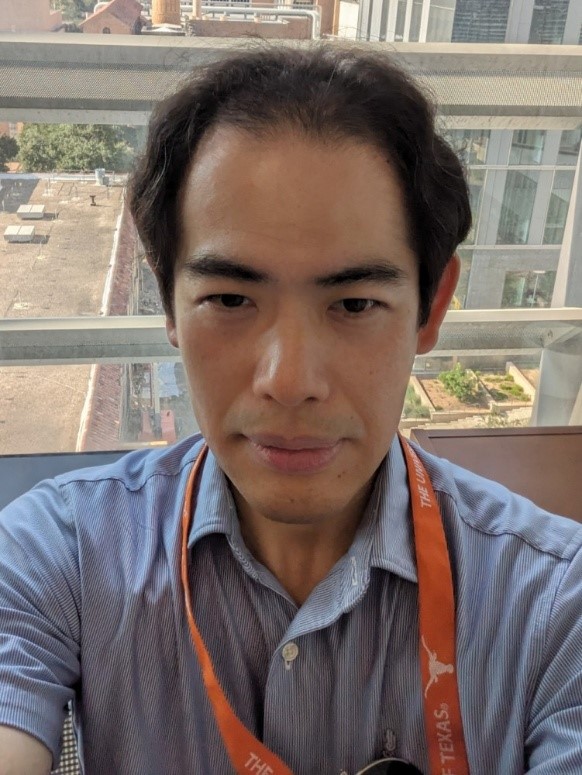
Prof. Hiroki Matsutani
Keio University, Japan
Biography: Hiroki Matsutani received the BA, ME, and PhD degrees
from Keio University, Yokohama, Japan, in 2004, 2006,
and 2008, respectively. He is currently a Professor in
the Department of Information and Computer Science at
Keio University. His research interests include computer
architecture, interconnection networks, hardware
accelerators, and machine learning algorithms.
Speech Title: On-Device Learning for Edge AI:
From Algorithms to Practical Applications
Speech Abstract: We are working on on-device
learning technologies that enable AI models to train and
adapt directly on edge devices with limited
computational resources. This approach to on-device
learning is highly effective when there is a discrepancy
between the training data available beforehand and the
data actually collected in the field. It is
characterized by its ability to update models on-site to
adapt to environmental changes and individual
differences. In recent years, AI chips equipped with
on-device learning capabilities have emerged, and their
commercialization and mass production are steadily
progressing. In this presentation, we will introduce
on-device learning, covering everything from its
underlying algorithms to its practical applications.

Prof. Zheng Yan (IEEE Fellow, IET Fellow, AAIA
Fellow, and AIIA Fellow)
Xidian University, China
Biography: Dr. Zheng
Yan is currently a Distinguished Professor at Xidian
University, China. She earned the Doctor of Science in
Technology from Helsinki University of Technology. She
is a Stanford World top 2% scientist, an Elsevier highly
cited Chinese researcher, and a ScholarGPS World Top
0.05% Highly Ranked Scholar. Her research interests are
in trust, security, privacy, and data analysis. She has
published more than 470 papers in prestigious journals
and conferences, with 300+ as the first or corresponding
author. She has authored two English books, used for
teaching for nearly a decade. She invented 220+ patents
including 50 PCT patents, with more than 150 patents
adopted by industry, most of them are solely invented by
her. Some of these patents have entered international
standards and widely used. She has received numerous
awards, including the Nokia Distinguished Inventor, IEEE
TCSC Award for Excellence, IEEE HITC Industrial Impact
Award, IEEE TEMS Distinguished Leadership, N²Women Star
in Computer Networking and Communications, three EU
awards, two IEEE TC best journal paper awards, Shaanxi
Natural Science Award, etc. She is currently a member of
IEEE Fellow Committee. She serves as a Co-EiC of
Information Sciences and an Area Editor/Associate Editor
for 60+ esteemed journals. She founded the IEEE
International Conference on Blockchain and serves as its
Steering Committee Co-chair. She has contributed to more
than 50 conferences as a General Chair or TPC Chair and
delivered more than 50 keynotes and invited talks. She
is a Member of Finnish Academy of Science and Letters,
and a Fellow of IEEE, IET, AAIA, and AIIA.
Speech Title: Decentralized Trust Management with
Privacy Preservation
Abstract: Blockchain provides a decentralized,
tamper-resistant, and transparent ledger that enables
secure, trustworthy, and auditable data sharing among
mutually untrusted parties without relying on a central
authority. As one of the most influential decentralized
technologies, blockchain has shown tremendous potential
across a wide range of applications, with decentralized
trust management being a particularly promising area.
However, its inherent transparency and openness also
introduce significant privacy challenges, making privacy
preservation a fundamental research issue. Although
substantial progress has been made, many open problems
remain, especially in achieving privacy-preserving
decentralized trust management.
In this talk, I will present our recent research on
blockchain-based decentralized trust management with
privacy preservation in two representative application
scenarios: cross-chain transactions and integrated
heterogeneous networks. I will introduce the key
techniques we have developed to address these challenges
and demonstrate their effectiveness through proofs,
experiments and several prototype systems. Some of these
prototypes have already been transferred to a leading
telecommunications company for further development and
practical deployment.
Invited Speaker

Prof. Seungshik Kang ,Kookmin University, Republic
of Korea
Biography: He received B.S., M.S., and Ph.D.
degrees in Computer Science from Seoul National
University in 1986, 1988 and 1993, respectively. He is
working for Kookmin University as a full professor. His
research interests include natural language processing,
text mining, big data processing, and machine learning.
His doctoral dissertation focused on Korean
morphological analysis, and the new algorithm he
proposed laid the foundation for the development of a
practical Korean morphological analyzer. He has made
significant contributions to the field of Korean
information processing, and the morphological analyzer
he developed has been widely used as a Hangul indexer in
domestic and international search engines.
Recently, his interest in deep learning NLP is Hangul
tokenization and embedding techniques. He is studying
the impact of tokenizer performance on the learning
speed and accuracy of deep learning NLP systems.
Speech Title: Recent Research Issues in Natural
Language Processing and Large Language Models
Abstract: Recently,
the field of natural language processing has been
undergoing rapid changes due to the advancement of
transformer-based large language models. Transformers
utilize a self-attention mechanism to simultaneously
learn the relationships between all words within a
sentence, serving as the foundational technology for
subsequent BERT and GPT models. In particular, GPT
models have significantly improved natural language
generation capabilities through large-scale data and
parameter expansion, enabling them to perform various
tasks such as human-like text generation, question
answering, translation, and code writing. However, the
advancement of LLMs signifies more than just simple
performance improvements. Issues such as increased
computational costs due to larger model sizes, bias in
training data, hallucination, and a lack of inference
ability continue to be raised. While early LLM research
focused on expanding model size and increasing
pre-training data, recent research directions have
expanded to include enhancing inference capabilities,
efficient learning methods, retrieval-augmented
generation, multimodal processing, agent systems, and
input representation optimization. However, LLM still
faces limitations such as hallucinations, high
computational costs, data quality issues, and
differences in expression across languages, and recent
research is shifting in the following directions. First,
research is focusing on efficient learning and inference
methods rather than increasing model size. Second, the
direction of research is shifting from simple language
generation to the development of models equipped with
complex reasoning capabilities. Third, research on
agent-based systems capable of external knowledge
retrieval and tool utilization is expanding. Fourth,
research on tokenization and input representation to
improve language expression itself is becoming
increasingly important. This study systematically
analyzes these latest trends in NLP research and
suggests research directions that should be considered
specifically in the Korean language environment. In
particular, in non-English languages like Korean,
linguistic characteristics such as morpheme structure,
conjugations of particles and endings, compound nouns,
and spacing variations have a significant impact on
model performance. This study analyzes major recent
research trends in the fields of NLP and LLM, and
examines inference-centric models, efficient learning,
knowledge retrieval-based generation, multimodal models,
semantic-based tokenization, and research directions
specific to the Korean language. Furthermore, it is
suggested that optimizing data quality and language
representation methods will become important research
tasks in future NLP research, rather than simply
expanding model size.




 Ms.Josie
SHEN
Ms.Josie
SHEN